Problem
Equipment keeps failing and nobody can prove it's the power.
EmersonEIMS solution
Power-quality logging: voltage, sag, swell, THD, transients.
Business outcome
Evidence-based fix instead of guesswork.
B2BEmersonEIMS serves commercial, industrial, healthcare, telecom, hospitality, government & contractor clients.• Engineering-led • SLA-backed • Documented commissioning
Keyboard Shortcuts
Surge protection, voltage stabilisation, harmonic filtering and UPS strategy for sites that have already lost equipment to dirty power.
Equipment keeps failing and nobody can prove it's the power.
Power-quality logging: voltage, sag, swell, THD, transients.
Evidence-based fix instead of guesswork.
No coordinated surge protection at incomer / DB / sensitive load.
Three-stage SPD design with proper earthing.
Equipment survives the next storm and the next switching event.
UPS, AVR and stabiliser bought separately, none working together.
End-to-end power-quality strategy from incomer to load.
One coherent plan, predictable protection.
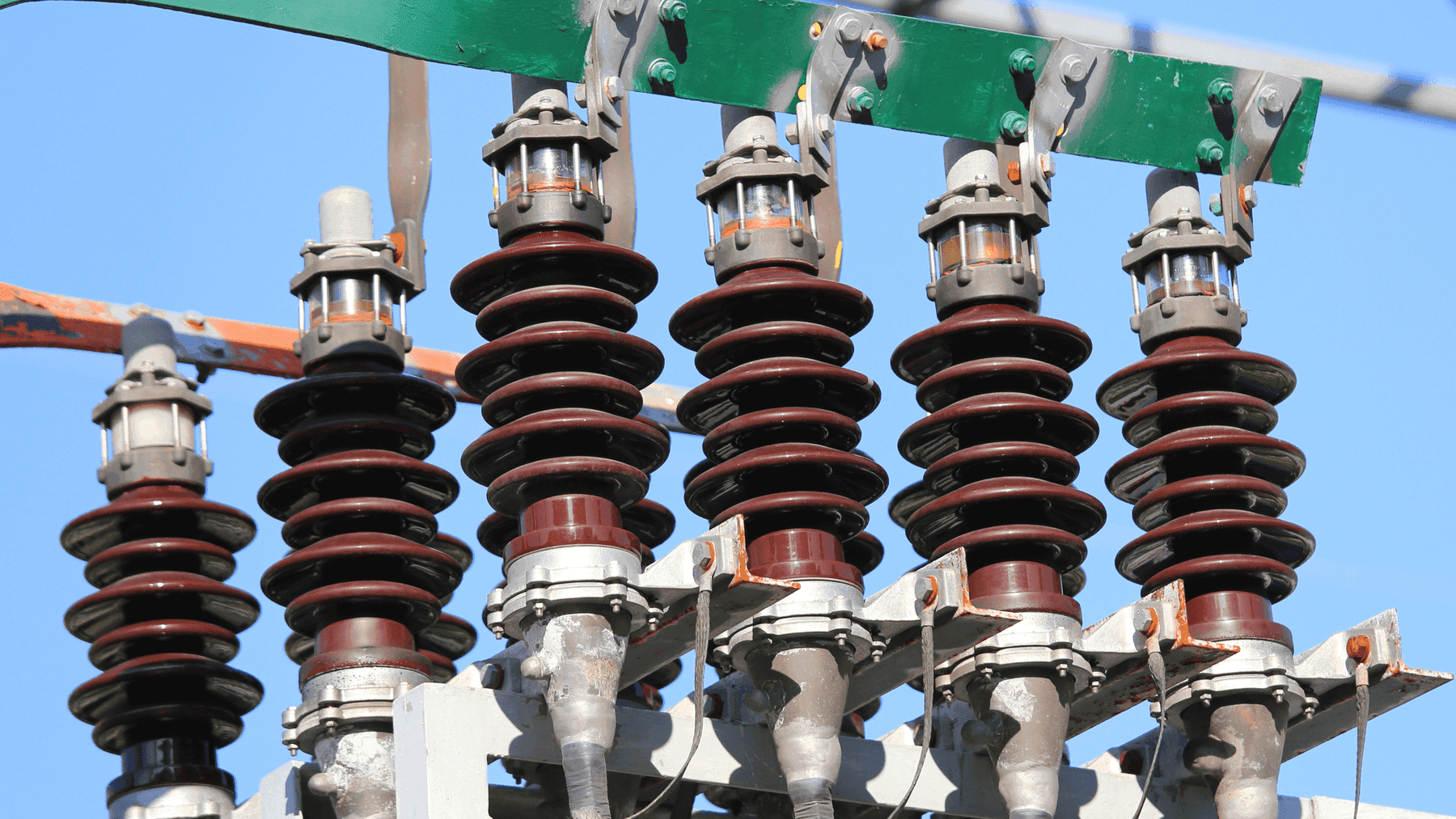
Comprehensive guide to power quality problems, surge protection, and voltage issues. Protect your equipment and operations.
Understanding power problems is the first step to protecting your equipment.
Voltage drop below 90% for >1 cycle
Voltage spike above 110% for >1 cycle
Microsecond high-voltage spike
Distorted waveform from non-linear loads
Deviation from 50Hz standard
High-frequency interference on power line
Engineering reference
Total blackouts are the obvious problem. The expensive, invisible one is dirty power — the sags, spikes, brown-outs and harmonics that quietly damage equipment and corrupt processes between outages. This is how to read the disturbances on a Kenyan supply and build the right defence at the right cost.
"Power problems" is not one thing. A proper diagnosis (IEC 61000-4-30) separates them, because each has a different cause and a different cure. A sag (dip) is a brief drop in voltage — often when a big motor starts nearby — that resets controls and dims lights. A swell is the opposite, a brief over-voltage that stresses insulation. Transients are fast, high spikes (switching, lightning) that destroy electronics outright. Brown-outs are sustained under-voltage that overheats motors. Harmonics are waveform distortion from non-linear loads. And the interruption — the total outage — is just the most visible member of the family.
Much of Kenya's grid delivers all of these to some degree, and most businesses misread the symptoms — blaming equipment that is actually a victim of the supply. The first step we take is to measure: a power-quality logger over a representative period reveals which disturbances are really present, so the money goes on the right defence instead of a guessed one.
| Disturbance | What it is | Typical cause |
|---|---|---|
| Sag / dip | Brief under-voltage | Large motor start, grid faults |
| Swell | Brief over-voltage | Load shedding, switching |
| Transient / spike | Fast high-voltage pulse | Lightning, switching, capacitors |
| Brown-out | Sustained under-voltage | Overloaded feeder, distance |
| Harmonics | Waveform distortion (THD) | VFDs, UPS, LED, IT loads |
| Interruption | Total loss of supply | Grid outage, faults |
The cost is rarely a single dramatic failure; it is the slow accumulation of shortened equipment life, mysterious control trips, corrupted production batches, overheating motors and IT that crashes "for no reason." Because the damage is gradual and the cause is invisible, it is usually misattributed — a factory replaces a string of failed drives without realising the supply harmonics are killing them. Quantifying it means adding up the lost output, the premature replacements and the downtime, and it is almost always far larger than the cost of fixing the supply.
This is the same logic as the cost-of-downtime calculation for backup power: until the loss is on the table, power quality looks like an optional expense; once it is, the protection pays for itself. We help clients put a number on it before recommending a cure.
There is no single device that fixes "power problems" — the right defence is layered, each layer addressing a specific disturbance. Power-factor correction tackles a poor power factor and the KPLC penalty. Surge protective devices (SPDs) clamp transients and spikes. An AVR / voltage stabiliser holds output voltage steady through sags, swells and brown-outs. Harmonic filters(passive or active) bring distortion back within IEEE 519 limits. A UPS rides through short interruptions and conditions the supply for critical loads. And a generator carries genuine outages. Most sites need a considered combination, not one box.
Over-buying is as common as under-buying: a site fits an expensive online UPS when a stabiliser and SPDs would have solved its actual (voltage and transient) problems, or fits capacitors that resonate with its harmonics and make things worse. The measurement in step 1 is what tells us which layers you actually need — and which you can skip.
| Problem | Right mitigation |
|---|---|
| Low power factor / KPLC penalty | Power-factor correction (detuned if harmonics present) |
| Transients / spikes / lightning | Surge protective devices (SPD), good earthing |
| Sags / swells / brown-outs | AVR / automatic voltage stabiliser |
| Harmonic distortion (high THD) | Passive or active harmonic filter |
| Short interruptions, sensitive loads | Online UPS |
| Sustained outages | Standby generator + ATS |
Total harmonic distortion (the power-quality yardstick)
THD = √(ΣVₙ²) ÷ V₁ (target: voltage THD < 5% per IEEE 519)
None of the protective devices above work properly on a bad earth. Surge protectors need a low-impedance path to divert a transient; sensitive electronics need a clean reference; protection needs to see a fault to clear it. A poor or corroded earth quietly undermines the whole power-quality strategy and is itself a shock hazard. We test earth resistance as part of any power-quality remediation, because fixing the supply on top of a bad earth is building on sand.
Done as a system — measure, then layer correction, surge protection, stabilisation, filtering, UPS and generator on a sound earth — power quality stops being a recurring mystery and becomes a solved, documented part of the installation.
Our engineers will assess your power quality issues and recommend the right protection solution.