Problem
Off-the-shelf canopies don't fit the site or the noise spec.
EmersonEIMS solution
Bespoke sound-attenuated canopy designed to actual dB target.
Business outcome
Compliant install, neighbours satisfied, equipment protected.
B2BEmersonEIMS serves commercial, industrial, healthcare, telecom, hospitality, government & contractor clients.• Engineering-led • SLA-backed • Documented commissioning
Keyboard Shortcuts
Workshop and on-site fabrication for power, water, HVAC and industrial projects. Sound-attenuated canopies, IP-rated enclosures, equipment skids, walkways and access platforms.
Off-the-shelf canopies don't fit the site or the noise spec.
Bespoke sound-attenuated canopy designed to actual dB target.
Compliant install, neighbours satisfied, equipment protected.
Outdoor electronics fail because the enclosure was never IP-rated properly.
Engineered IP-55/65 enclosures with thermal management.
Protected assets, fewer warranty disputes.
Project delays because steelwork came late or wrong.
In-house workshop with drawings, QC and timeline ownership.
Predictable delivery, single point of responsibility.
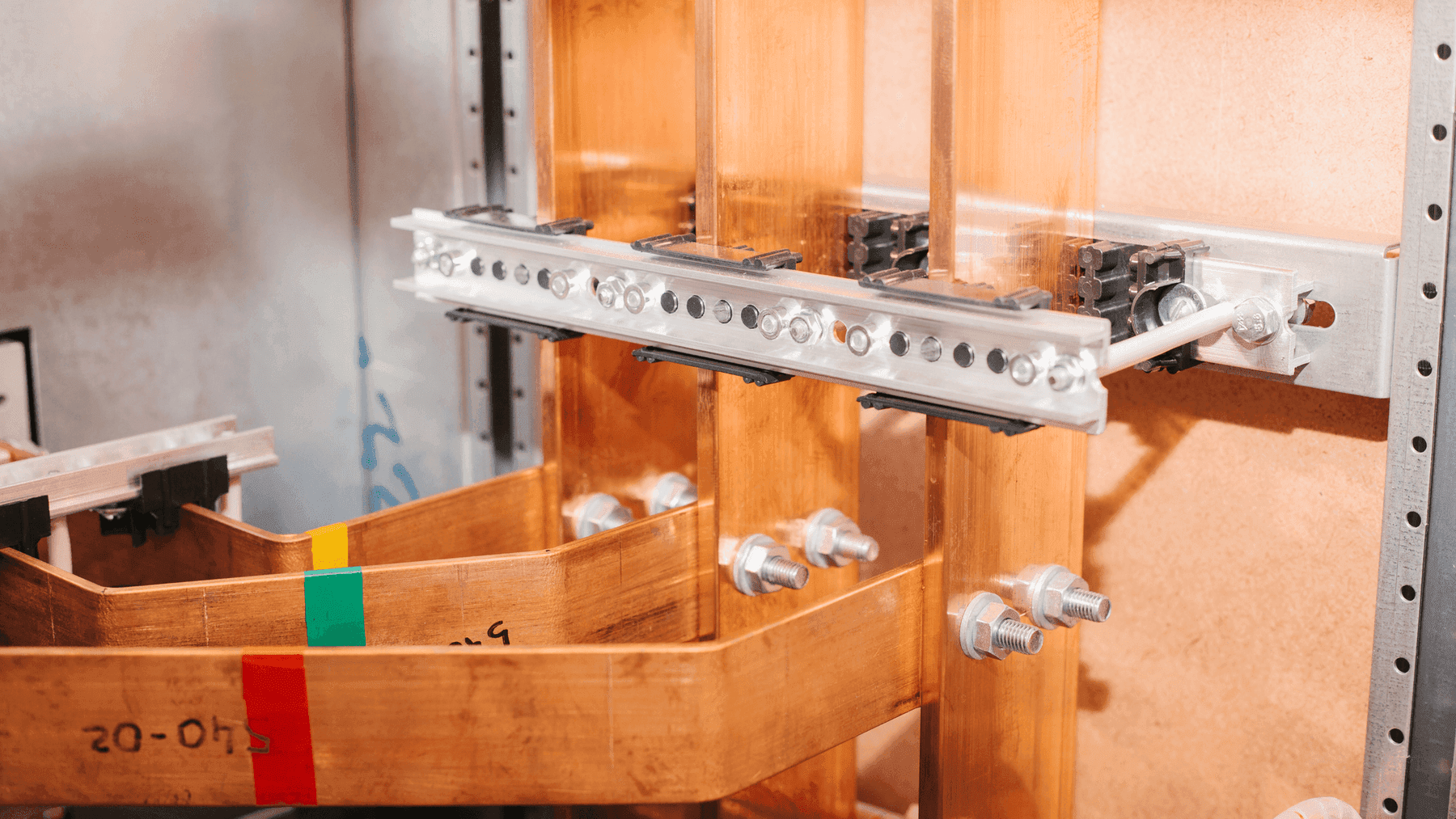
Complete metal fabrication solutions from structural steel to pressure vessels. ASME certified, ISO quality systems, and over 30 years of experience serving East Africa's industrial sector.
Metal fabrication is the cornerstone of industrial infrastructure, transforming raw steel and other metals into the structures, vessels, and equipment that power modern industry. Our comprehensive fabrication facility combines traditional craftsmanship with cutting-edge CNC technology.
With over 30 years of experience serving East Africa's industrial sector, we have built a reputation for quality, reliability, and on-time delivery. Our ISO 9001:2015 certified quality management system ensures consistent standards across all projects.
Structural steel fabrication forms the foundation of our capabilities. From industrial buildings and warehouses to complex structures like bridges and crane gantries, our team handles projects of all scales. We work with standard and high-strength steels, delivering painted or galvanized finishes.
Our ASME U-Stamp certification demonstrates our capability to fabricate pressure vessels meeting the most stringent international standards. Whether it's process vessels, heat exchangers, or storage tanks, we deliver equipment that meets design specifications and safety requirements.
Process piping fabrication requires precision and expertise. Our qualified welders and rigorous quality control ensure that every spool, from carbon steel to exotic alloys, meets the demanding requirements of refineries, chemical plants, and power stations.
Sheet metal work encompasses everything from simple enclosures to complex architectural features. Our CNC laser cutters and press brakes enable precision fabrication of panels, housings, and ductwork in various materials and finishes.
Heavy plate fabrication serves the mining and construction industries with wear-resistant components, buckets, hoppers, and structural elements. We work with Hardox, AR400, and other specialized steels to deliver components that withstand the harshest operating conditions.
Surface treatment is critical to the longevity of fabricated structures. Our blast chamber and paint facilities deliver finishes meeting international specifications, while hot-dip galvanizing provides superior corrosion protection for outdoor structures.
Beyond fabrication, we offer complete solutions including engineering design, shop drawings, site installation, and after-sales support. Our project management team ensures seamless coordination from concept to commissioning.
Quality is embedded in every process. From material certification to final inspection, each stage is documented and verified. Our welders are certified to AWS and ASME standards, and our QC inspectors are NDT qualified level II.
Professional Standards
Premium Materials
Workplace Safety
Work Guarantee
Engineering reference
A fabricated structure is only as honest as its weakest weld and its thinnest coat of paint. This is the engineering behind the steelwork we cut, weld and protect — material selection, joint integrity and the corrosion strategy that decides whether a structure lasts five years or fifty.
The number stamped on a steel section — S275, S355, A36 — is its minimum yield strength in MPa, the stress at which it stops springing back and starts to deform permanently. A higher grade carries more load per kilogram, so the right grade can mean lighter, cheaper structures; the wrong (or uncertified) steel is a structure that yields under a load it was supposed to hold. Just as important is ductility — the steel's ability to stretch and warn before it breaks rather than snapping brittle, which is what keeps a structure standing long enough to be evacuated in an overload or seismic event.
On the Kenyan market, mill certificates matter: under-specified or re-rolled steel of unknown provenance is common and dangerous for load-bearing work. We specify to a known grade with traceable certification, because the design calculations are meaningless if the actual steel does not meet the yield assumed in them. For a portal frame, a mezzanine or a tank, that traceability is the foundation everything else rests on.
| Grade | Min. yield | Typical use |
|---|---|---|
| S235 / A283 | 235 MPa | Light structures, general fabrication |
| S275 / A36 | 275 / 250 MPa | General structural steelwork |
| S355 / A572-50 | 355 MPa | Heavy frames, beams, long spans |
| Stainless 304/316 | 205–310 MPa | Hygiene, coastal/corrosive duty |
Sizing a beam or column is a balance of two checks: strength (will it yield or buckle?) and serviceability (will it sag or sway enough to crack finishes or alarm users, even if it does not fail?). Bending stress depends on the load, the span and the section modulus — a geometric property that rewards putting material far from the neutral axis, which is exactly why I-beams and hollow sections are so efficient and a solid bar is so wasteful.
Deflection is the check that catches people out: a beam can be perfectly safe and still bounce or droop unacceptably. Codes cap deflection at a fraction of the span — often span/250 for general beams, tighter where brittle finishes hang below. We design to both limits and detail the connections to match, because a member is only as strong as the bolts and welds that transfer its load into the next one.
Bending stress in a beam
σ = M ÷ Z Z = I ÷ c
Most fabrication failures are weld failures, and most weld failures are process failures. The four common processes trade speed against control: MMA/stick (SMAW) is portable and forgiving on site; MIG/MAG (GMAW) is fast for production; flux-cored (FCAW) suits heavy site work; and TIG (GTAW) gives the cleanest, most controlled welds for stainless and thin or critical work. The choice follows the material, the position and the quality the joint demands.
The defects that matter are the ones you cannot see: lack of fusion and incomplete penetration leave a joint that looks finished but carries a fraction of its intended load; porosityfrom moisture or poor gas shielding riddles the weld with voids; undercut and crackingstart fatigue failures. We control heat input, joint preparation, preheat where the section thickness demands it, and consumable storage (damp electrodes are a classic source of hydrogen cracking) — and we verify with the right non-destructive test for the joint's criticality.
| Process | Strength | Best for | Typical NDT |
|---|---|---|---|
| MMA / Stick (SMAW) | Portable, all-position | Site work, repairs | Visual, MPI |
| MIG/MAG (GMAW) | Fast, clean | Workshop production | Visual, MPI |
| Flux-cored (FCAW) | High deposition | Heavy site structures | UT, MPI |
| TIG (GTAW) | Precise, low spatter | Stainless, thin, critical | Visual, dye-penetrant |
Steel and the Kenyan environment are old enemies, and the right protection depends entirely on where the structure stands. ISO 12944 grades atmospheres from C1 (dry interior) up to C5 and CX for the salt-laden, humid air of Mombasa, Kilifi and Diani — where unprotected steel can lose measurable thickness every year. Specifying an inland paint system for a coastal structure is one of the most expensive mistakes in fabrication, because the repair means scaffolding, blasting and re-coating a structure already in service.
The strategy is layered: proper surface preparation (abrasive blasting to Sa 2½ — paint over mill scale or rust simply peels), then the system to suit the category — a zinc-rich primer with epoxy and polyurethane topcoats for severe atmospheres, or hot-dip galvanizing (ISO 1461) where a tough, self-healing metallic coat is wanted. For coastal and marine work we default to galvanizing plus a duplex paint system, because the cost of doing it once correctly is a fraction of the cost of fighting rust for the life of the asset.
| Category | Environment | Kenyan example |
|---|---|---|
| C2 | Low — dry rural | Inland highlands, sheltered |
| C3 | Medium — urban/industrial | Nairobi, industrial areas |
| C4 | High — industrial/coastal | Near-coast, chemical plants |
| C5 / CX | Very high — marine | Mombasa, Kilifi, Diani seafront |
The final guarantee of a structure is not the steel or the paint but the people and procedures behind the welds. A Welding Procedure Specification (WPS) records the exact recipe — material, joint, process, consumable, current, preheat — proven by a tested Procedure Qualification Record (PQR). Welders are then qualified against that procedure, so the weld on your structure is made the same way as the weld that was destructively tested and passed.
ISO 3834 sets the quality framework around all of this — traceability of materials, calibration of equipment, inspection records. For load-bearing and pressure work it is not bureaucracy; it is the documented chain that lets an engineer sign off the structure with confidence. We work to qualified procedures and hand over the records, because a weld you cannot trace is a weld you cannot trust.
From concept to installation, we deliver quality fabrication solutions. Send us your drawings for a competitive quotation.